
Choosing a reliable Biphenyl steam generator Exporter requires more than comparing prices or browsing polished websites. Global buyers need equipment that performs consistently under demanding thermal conditions. They also need clear documentation, responsive communication, and dependable after-sales support.
This guide introduces ten exporters serving international industrial markets. Each company should be assessed through practical evidence, including product specifications, manufacturing capacity, inspection procedures, and export experience. Buyers may examine generator materials, operating temperature ranges, pressure controls, energy efficiency, and compatibility with existing systems. Factory photographs can help, but independent inspections offer stronger assurance.
Details matter.
A credible exporter should explain its quality-control process in plain language. It should provide relevant test reports, certificates, warranty terms, and spare-parts information. Shipping capability also deserves attention, especially when equipment requires reinforced packaging, moisture protection, or specialized handling. Local service partners may reduce installation delays and simplify maintenance.
No ranking is permanently perfect. Exporter capabilities, certifications, lead times, and market conditions can change. Some suppliers may communicate impressively but offer limited technical depth. Others may have strong engineering teams yet present outdated online information. That gap deserves careful reflection. Buyers should request current references, verify company records, and compare like-for-like quotations before making a decision.
The following overview focuses on practical selection factors rather than promotional claims. It is intended to help procurement teams, engineers, and distributors identify suitable partners for safe, compliant, and efficient steam-generation projects across global markets.
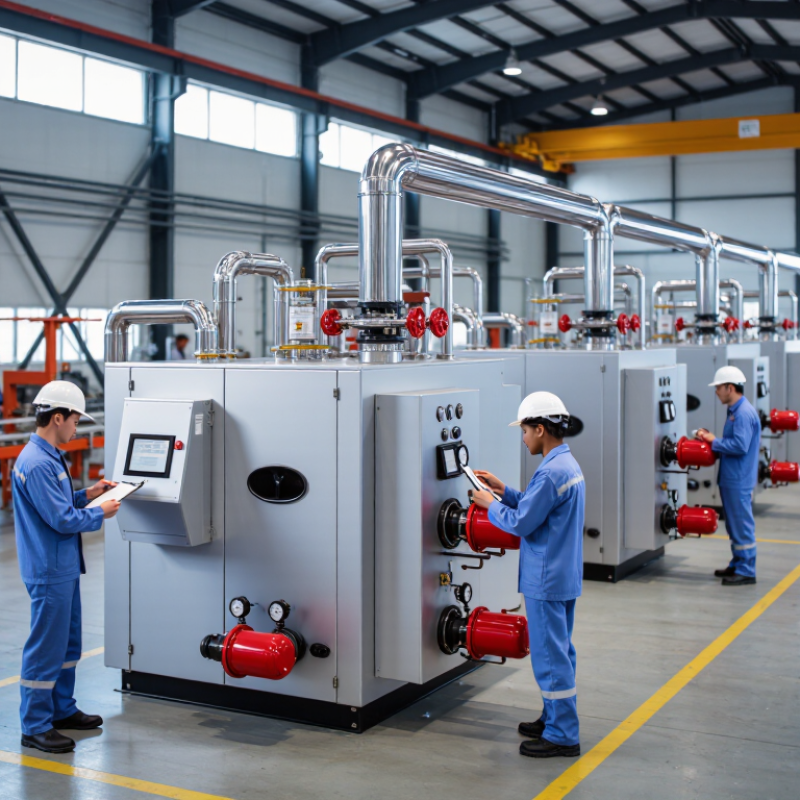
Biphenyl steam generators use a high-temperature heat-transfer fluid to create steam indirectly. The fluid circulates through a closed heating loop. It transfers heat across a vessel or heat exchanger, while treated water becomes process steam. It is not a direct steam source. That distinction matters.
These systems support chemical processing, resin production, pharmaceutical utilities, industrial drying, and controlled heating operations. Their value comes from stable temperatures and efficient heat transfer at elevated conditions. A practical installation usually includes circulation pumps, expansion tanks, temperature sensors, pressure controls, and leak detection. Engineers must also check fluid compatibility with seals, pipes, and heat exchanger materials.
Experienced buyers should examine thermal capacity, operating pressure, maintenance access, and documented testing. Supplier records should explain fluid quality, inspection methods, emergency shutdowns, and operator training. Biphenyl-based fluids require careful handling because overheating, oxidation, or leakage can reduce performance and increase workplace risks. Ventilation and monitoring are essential.
A common mistake is judging equipment only by output capacity. Real performance depends on water quality, control response, insulation, and maintenance discipline. Small design weaknesses become expensive during continuous production. The design is not foolproof. Buyers should request operating data from comparable applications and ask how failures are detected. Good engineering is measurable, but field conditions still deserve honest review.
| Rank | Exporter Market | Typical Equipment Configuration | Heat-Transfer Medium | Indicative Operating Envelope | Steam Service | Common Industrial Applications | Relevant Compliance Frameworks | Export and Project Strengths |
|---|---|---|---|---|---|---|---|---|
| 1 | Germany | Indirect shell-and-tube steam generators, thermal-fluid boilers, skid-mounted circulation systems | Eutectic biphenyl/diphenyl-oxide fluid; commonly selected for high-temperature indirect heating | Typical heat-transfer loop: approximately 250–400 °C; exact limits depend on fluid, materials and design pressure | Process steam and clean steam through an indirect heat exchanger; project-specific pressure and flow | Chemical processingPharmaceuticalsPolyesterFood processing | Pressure Equipment Directive 2014/68/EU, EN 13445, applicable AD 2000 practices and customer specifications | Strong engineering documentation, automation integration, high-efficiency heat recovery and European conformity support |
| 2 | Italy | Packaged thermal-oil steam generators, coil-type evaporators and custom heat-recovery units | Biphenyl-based synthetic heat-transfer fluid used in a closed, pumped circuit | High-temperature liquid-phase service; operating range is set by fluid stability, pump selection and pressure control | Low- to medium-pressure process steam for continuous production lines | TextilesFood and beveragePlasticsSpecialty chemicals | PED 2014/68/EU, EN 12952 or EN 12953 where applicable, CE marking and project-specific inspection rules | Flexible customization, compact packaged systems and broad experience with industrial heat-transfer equipment |
| 3 | China | Thermal-fluid boilers, pressure-vessel steam generators, waste-heat units and modular export skids | Synthetic biphenyl/diphenyl-oxide fluid or an equivalent high-temperature organic heat-transfer fluid | Often engineered for approximately 250–380 °C loop operation; final ratings require process and materials review | Utility or process steam for manufacturing plants; output is engineered to buyer specifications | Building materialsChemical plantsSolar thermalIndustrial utilities | ASME Section VIII or GB standards, PED documentation for European projects, inspection certificates and buyer specifications | Large fabrication capacity, competitive modular packages and broad availability of pressure-vessel manufacturing resources |
| 4 | Japan | High-reliability indirect steam generators, precision heat exchangers and fully instrumented thermal-fluid systems | High-purity synthetic organic heat-transfer fluid selected for stable closed-loop operation | Designed for controlled high-temperature service with strict monitoring of fluid condition, leakage and expansion volume | Stable process steam for precision manufacturing and continuous industrial operations | Electronics materialsFine chemicalsPharmaceuticalsFood technology | JIS and applicable international pressure-equipment requirements, ASME or PED documentation when specified | Strong quality systems, precise controls, compact layouts and detailed commissioning documentation |
| 5 | South Korea | Packaged process-heat systems, shell-and-tube generators and integrated plant utility modules | Biphenyl-based thermal fluid in a closed circulation loop with expansion and nitrogen-blanketing provisions | High-temperature service commonly engineered within the limits of the selected fluid and component materials | Process steam and hot-water generation for large production facilities | PetrochemicalsRefiningShipbuildingIndustrial manufacturing | ASME, Korean pressure-equipment requirements, PED for qualifying destinations and client inspection standards | Good capability for integrated control panels, large industrial projects and export-oriented plant packages |
| 6 | United States | Thermal-fluid heaters, indirect steam generators, waste-heat recovery systems and engineered turnkey packages | Synthetic biphenyl/diphenyl-oxide fluid or other approved organic heat-transfer fluids selected for the duty | Commonly specified for high-temperature liquid-phase operation; maximum temperature is fluid- and design-dependent | Plant steam, clean-process steam or recovered steam subject to pressure-vessel and boiler design requirements | Chemical processingRenewable energyPulp and paperFood processing | ASME Boiler and Pressure Vessel Code, National Board registration where required, NFPA practices and local codes | Strong process engineering, controls integration, aftermarket support and compliance with North American specifications |
| 7 | India | Thermal-oil boilers, coil-type steam generators and custom-built process-heating skids | High-temperature synthetic heat-transfer fluid, including biphenyl-based formulations where specified | Project-dependent high-temperature operation; system design normally includes expansion, filtration and fluid-monitoring provisions | Process steam for textile, chemical, food and manufacturing facilities | TextilesPharmaceuticalsDairy and foodRubber and plastics | Indian boiler and pressure-vessel requirements, ASME documentation for export projects and destination-country certification | Competitive fabrication, engineering adaptation for local conditions and growing export-packaging capability |
| 8 | France | Indirect steam generators, thermal-fluid process packages and energy-recovery systems | Synthetic organic heat-transfer fluid chosen for high-temperature process heating and closed-loop circulation | High-temperature operation with emphasis on containment, thermal expansion management and emissions control | Process and clean steam for regulated and energy-intensive production facilities | Nuclear supply chainPharmaceuticalsAgri-foodFine chemicals | PED 2014/68/EU, EN standards, French inspection requirements and client quality-assurance procedures | Strong engineering for regulated industries, energy efficiency and European documentation packages |
| 9 | Spain | Thermal-fluid steam generators, solar-thermal auxiliary systems and packaged industrial heat-recovery units | Biphenyl/diphenyl-oxide heat-transfer fluid or another synthetic fluid matched to the operating profile | Suitable for high-temperature indirect heating; actual temperature and pressure depend on the complete thermal circuit | Process steam, auxiliary steam and steam produced from recovered industrial heat | Solar thermalFood processingCeramicsChemical production | PED 2014/68/EU, EN 13445, CE requirements and destination-country pressure-equipment rules | Experience with renewable-heat integration, export-ready skids and industrial energy-efficiency projects |
| 10 | Türkiye | Thermal-oil boilers, indirect steam generators and containerized process-heating packages | Synthetic high-temperature heat-transfer fluid selected according to process duty and compatibility requirements | Typically engineered for medium- to high-temperature closed-loop service with dedicated expansion and safety systems | Process steam for textile, food, chemical and general manufacturing applications | TextilesFood productionWood productsGeneral industry | PED 2014/68/EU for applicable exports, EN standards, CE marking and buyer inspection requirements | Regional logistics advantages, adaptable fabrication and practical skid-mounted solutions for nearby export markets |
A high-temperature fluid circulates through a closed heating loop. It transfers heat through a vessel or heat exchanger. Treated water then becomes process steam. It is indirect.
They support chemical processing, resin production, pharmaceutical utilities, and industrial drying. Controlled heating operations may also use them. Applications need stable temperatures.
Common components include circulation pumps, expansion tanks, temperature sensors, and pressure controls. Leak detection is also important. Ventilation matters.
Compare thermal capacity, operating pressure, material specifications, and maintenance access. Request heat-output data and pressure-test records. Check fluid compatibility with seals, pipes, and exchangers.
Request drawings, heat-transfer calculations, material certificates, and documented testing. Review comparable installation references and factory inspection evidence. Polished brochures are not enough.
Confirm fabrication, inspection, packing, shipping, and installation guidance. Clarify warranty coverage, response times, and spare-parts availability. Missing sensors or seals can delay production.
Operators should monitor temperature, pressure, ventilation, and possible leaks. Overheating and oxidation can reduce fluid performance. Training and emergency shutdown procedures should be documented.
Output capacity is only one factor. Water quality, control response, insulation, and maintenance also affect performance. Real conditions may differ from design assumptions. The design is not foolproof.
Compare at least three technical quotations and request operating data from similar projects. Consider a factory visit, live video inspection, or independent pre-shipment test. Ask difficult questions early.
It should record limitations, delivery terms, inspection duties, maintenance intervals, and safe fluid-handling procedures. Local electrical and pressure requirements need confirmation. Assumptions can fail.
Biphenyl steam generators are specialized industrial systems used to produce and circulate high-temperature thermal energy for applications such as chemical processing, pharmaceuticals, food production, and advanced manufacturing. This overview explains how global buyers can evaluate a Biphenyl steam generator Exporter by examining equipment design, heating efficiency, operating stability, safety features, customization options, and after-sales support. It also highlights the importance of understanding production capacity, quality-control procedures, certifications, and compliance with applicable international standards.
The top exporters should be compared according to product quality, engineering expertise, delivery capability, export experience, and service responsiveness rather than price alone. Buyers should carefully assess technical documentation, testing procedures, warranty terms, spare-parts availability, installation guidance, and communication efficiency before selecting an international partner. A reliable exporter should provide consistent manufacturing standards, transparent commercial terms, secure packaging, and dependable support throughout the equipment’s service life, helping customers achieve safe, efficient, and long-term industrial performance.
