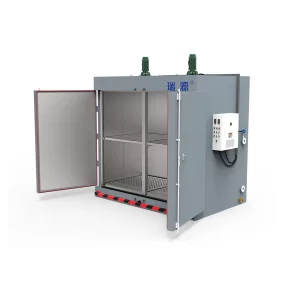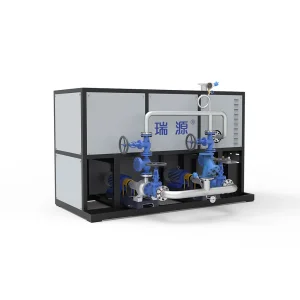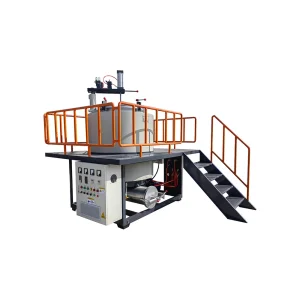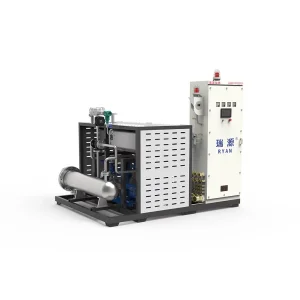
Explore our leading selection of engineered heaters, vacuum cleaning systems, and thermal fluid generators.
Why modern manufacturing facilities are shifting from direct-fired heaters to high-precision electric hot oil units.
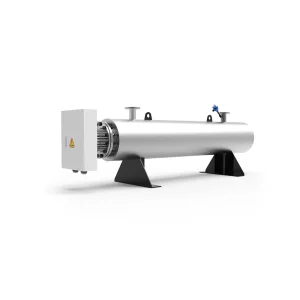
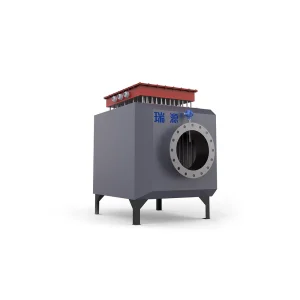
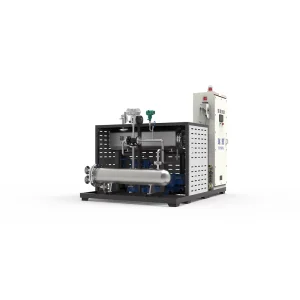
Across the global manufacturing footprint, the demand for precise, reliable, and sustainable process heating is growing rapidly. Traditionally, direct-fired gas or oil burners dominated industrial facilities. However, stringent carbon emission mandates, rising fuel volatility, and the need for precision control have accelerated the transition to electric thermic fluid heaters (hot oil units). These systems transfer thermal energy through a closed-loop organic or synthetic fluid medium, supplying uniform heat up to 350°C and beyond at near-atmospheric pressures.
This macro-industrial transformation is especially critical in petrochemical processing, fiber production, plastics fabrication, and pharmaceutical production, where even a ±1°C deviation in temperature can compromise batch quality. By replacing high-pressure steam boilers with electric hot oil systems, companies eliminate water treatment infrastructure, blowdown energy losses, and the risk of pipeline corrosion, achieving thermal efficiencies exceeding 98%.
Jiangsu Ruiyuan Heating Equipment Technology Co., Ltd. customizes systems to solve complex heating and cleaning bottlenecks.
A comparative framework based on design engineering, safety certification, and application versatility.
When selecting a hot oil unit manufacturer, procurement teams must evaluate beyond base purchase costs. A system's long-term value depends on watt density optimization (to prevent fluid carbonization), seal integrity (to mitigate volatile organic compound emissions), and modular skid integration.
Below is a comparative breakdown of key metrics defining the top tier of international manufacturers, highlighting how Jiangsu Ruiyuan integrates high-end engineering into cost-competitive, skid-mounted systems:
| Manufacturer Segment | Primary Technology | Avg. Heat Flux Density | Safety Standards | Typical Applications |
|---|---|---|---|---|
| Tier 1 Global OEM (US/EU) | Large Combustion & Electric Systems | 1.8 - 2.2 W/cm² | ASME Sec VIII, CE, UL | Refinery, Large Petrochemical |
| Jiangsu Ruiyuan (China Expert) | Skid-Mounted Electric & Biphenyl Heaters | 1.5 - 2.0 W/cm² (Optimized) | ASME, CE-PED, GB, Explosion-proof | Chemical, Plastics, Textile, Vacuum Pyrolysis |
| Specialty Thermal Fluid Brands | Synthetic Fluid Vaporizers | 2.0 - 2.4 W/cm² | DIN EN 12953, EAC | Polyester Synthetic Fiber Production |
| Standard Commercial Fabricators | Standard Hot Oil Boilers | > 2.5 W/cm² (High Risk of Cracking) | Local Standards Only | Asphalt plants, General HVAC heating |
Navigating complex international regulatory systems for explosion-proof and high-pressure operations.
Operating hot oil heaters at temperatures up to 350°C requires careful safety planning. Standard configurations must meet local legal directives depending on installation location. This includes ATEX/IECEx zone zoning in Europe, Class I Division 1 & 2 (NEMA) classifications in North America, and SQL certifications (GB standard) in China.
At Ruiyuan, compliance is built directly into our engineering phase:
How thermal systems are integrating IoT diagnostics, hybrid heating networks, and high-vacuum recovery.
Integrating online viscosity and dielectric sensors within the oil pipeline. This configuration monitors thermal fluid breakdown in real-time, warning operators of carbonization hazards before system fouling occurs.
Developing dual-fuel and hybrid electric-fired thermal fluid boilers. These units leverage excess wind or solar capacity to charge thermal storage loops, significantly lowering operating costs.
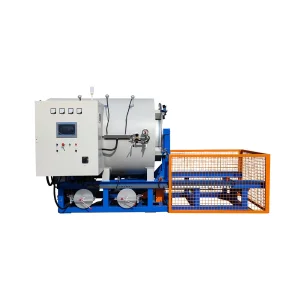
Improving horizontal and vertical vacuum cleaning furnaces with integrated gas scrubbers. This setup decomposes polymer residues from metal tooling without releasing volatile gases into the atmosphere.
Expert answers to common engineering questions regarding the design, operation, and maintenance of hot oil systems.
For organic heat transfer oils, the watt density on the heating element surfaces should stay between 1.5 to 2.2 W/cm² (9.6 to 14.2 W/in²). Exceeding 2.5 W/cm² increases the boundary film temperature, which causes rapid thermal cracking, carbon deposit buildup on the elements, and eventual element failure.
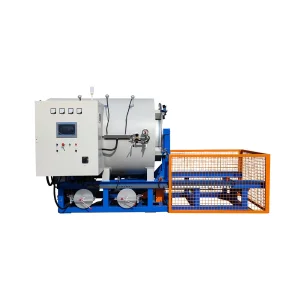
Vacuum cleaning furnaces heat components to 350°C–500°C under negative pressure. This oxygen-deprived environment causes organic polymers to pyrolyze, breaking down into gases and carbon. The gases are then drawn out and oxidized in an afterburner chamber, leaving the steel tools clean and free of abrasive thermal damage.
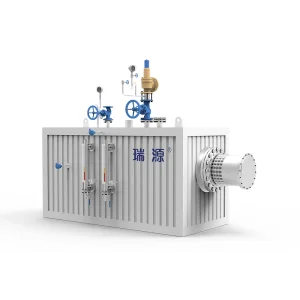
Biphenyl-diphenyl oxide mixtures exhibit excellent thermal stability up to 400°C. In vapor-phase systems, biphenyl delivers latent heat at high temperatures with lower operating pressures than steam, providing safe, uniform, and precise heating for chemical reactors.
Discover our comprehensive range of high-efficiency thermal heaters, industrial ovens, and explosion-proof steam boilers.