Explore our elite range of advanced industrial heating systems, vacuum furnaces, and precision thermal control units engineered to international standards.
For over three decades, Jiangsu Ruiyuan Heating Equipment Technology Co., Ltd. has established itself at the forefront of industrial electric heating innovation. As a premier Chinese manufacturing company, our foundations rest on four core principles: integrity as our foundation, quality as our key to success, keeping pace with the times, and continuous innovation. Our dedicated approach to research and development, combined with integrated production, sales, and global after-sales support, positions us as a trusted partner for industries requiring critical thermal solutions.
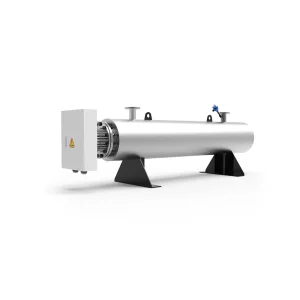
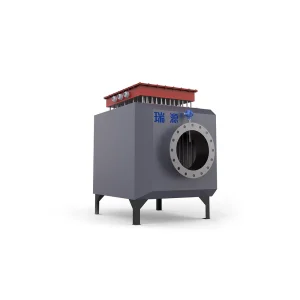
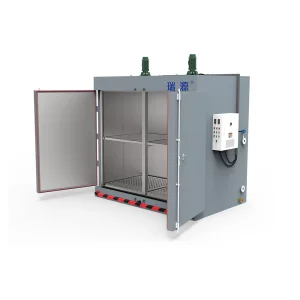
Specializing in high-performance electric thermal oil heaters, vacuum cleaning furnaces, air duct heaters, biphenyl steam generators, and highly integrated thermal fluid control systems, we design and build solutions to meet the most challenging operational environments.
At Ruiyuan, we focus our engineering expertise on resolving the four main pain points faced by modern industrial thermal operations:
Understanding the engineering standards, safety compliance framework, and design protocols required for European and global deployments.
Under Directive 2014/68/EU (PED), thermic oil heaters classified as pressure equipment must undergo rigorous hazard category assessments. Our boilers are engineered with high-strength carbon steel or stainless steel pressure boundary structures. We utilize automated submerged arc welding (SAW) and perform 100% non-destructive testing (NDT), including X-ray radiographic testing and hydrostatic pressure testing at 1.5 times the design pressure limit.
When operating in volatile industrial environments, explosion protection is paramount. Ruiyuan provides ATEX-compliant explosion-proof designs (Ex d IIB/IIC T1-T6 Gb). The electrical terminal boxes, heating element assemblies, control systems, and instrumentation are engineered with flameproof enclosures, preventing internal electrical sparks from triggering external vapor combustion.
Our systems integrate multi-layer safety interlocking loops compliant with EN 12952 standards. Featuring redundant temperature controllers, independent low-flow alarms, over-pressure pressure switches, and thermal oil expansion tank level diagnostics, we achieve up to SIL 2 functional safety ratings to protect operators, equipment, and production continuity.
How Jiangsu Ruiyuan leverages vertical industrial integration, raw material access, and advanced tooling to deliver premium-tier equipment at competitive prices.
China leads the world in industrial manufacturing capacity, and the Yangtze River Delta cluster (where Jiangsu Ruiyuan is situated) represents the global epicenter of thermal engineering technology. This geographic concentration gives us immediate access to premium steel mills, advanced metallurgical testing facilities, and specialized CNC machining centers.
By integrating manufacturing steps—from custom element winding and shell welding to control panel assembly and software programming—under one roof, we eliminate intermediate markups. This ensures rigorous control over manufacturing schedules.
Direct raw material procurement from primary domestic steel mills ensures chemical composition verification and lower material costs.
In-house manufacturing of U-shaped heating components with custom-designed heat flux densities ensures extended thermal life.
We understand that procurement is not just about the initial capital expense (CAPEX). It involves long-term operational costs (OPEX), project schedules, and compliance.
A comparative overview showing the environmental, thermodynamic, and operational benefits of electric thermal fluid systems.
| Feature Parameter | Ruiyuan Electric Thermic Oil Boiler | Conventional Gas/Oil Fired Boiler | Operational/Safety Impact |
|---|---|---|---|
| Heating Source | Electric Resistance Heating Elements (Flanged) | Open Flame Burner (Combustion Chamber) | Zero direct emissions, no exhaust stack required. |
| Thermal Efficiency | Up to 98.5% | 80% – 88% (varies by flue loss) | Drastic reduction in energy waste; lower OPEX. |
| Temperature Control | SCR (Thyristor) PID Control (±0.5°C) | High/Low Burner Step Control (±5°C to ±10°C) | Precise control prevents thermal fluid degradation. |
| Operational Pressure | Atmospheric or low system pressure (<0.6 MPa) | Requires higher working pressures for vapor phases | Safer operations, lower classification requirements. |
| Footprint & Installation | Skid-mounted integrated package, minimal footprint | Large mechanical footprint, extensive civil works | Reduced installation costs and faster commissioning. |
| Maintenance Profile | Element replacement without piping modifications | Requires regular burner tuning, refractory maintenance | Minimized downtime and lower maintenance overhead. |
Providing cross-border support, commissioning supervision, and adherence to localized regional pressure vessel guidelines.
For European buyers, we provide fully certified solutions under the Pressure Equipment Directive (2014/68/EU) and Machinery Directive (2006/42/EC). Complete Declaration of Conformity and technical documentation packages are available in English and German.
Our systems utilize components that meet UL, CSA, and ASME Section VIII Div 1 guidelines. Control panels are designed to conform with NFPA 79 electrical standards for industrial machinery, with NEMA-rated enclosures for local electrical inspector approvals.
We deliver systems compliant with EAC regulations for the Eurasian Economic Union, alongside custom calibrations matching domestic energy frameworks throughout South Asia and the Middle East, ensuring trouble-free site integration.
We ensure peace of mind through a comprehensive commissioning program. Our field service engineers assist with installation verification, electrical alignment, hydrostatic test supervision, and controls calibration.
To ensure plant operators are fully equipped, Ruiyuan delivers customized training sessions on thermal fluid management, burner/heater preventative maintenance, thermal oil quality testing, and safety trip diagnosis.
To minimize unplanned downtime, we maintain stock of critical wear components at strategic shipping nodes. Critical heating elements, high-temperature gaskets, circulation pumps, control relays, and temperature sensors can be expedited internationally via premium courier channels.
By utilizing internationally recognized brands for PLC modules, relays, contactors, and control valves, clients can easily source equivalent replacement parts locally.
How the shift toward zero-emission energy and smart factories is shaping the design of modern thermic fluid heating systems.
As global industries target net-zero carbon footprints, companies are replacing gas and coal-fired heaters with high-efficiency electric thermal boilers. Utilizing renewable power grids directly eliminates plant-level Scope 1 emissions, providing a cleaner way to achieve process temperatures of up to 350°C.
Modern Ruiyuan heaters integrate with smart sensor arrays that monitor thermal fluid flow velocity, differential pressures, element surface temperatures, and insulation health. This telemetry is processed via PLC algorithms to predict element scale buildup and schedule cleanings before failures occur.
Integrating electric thermal fluid systems with low-temperature industrial waste heat recovery loops is a growing trend. Pre-heating return fluid with process exhaust gas lowers the electrical power required to maintain peak process temperatures, reducing overall energy costs.
Examining how distinct manufacturing sub-sectors utilize high-temperature thermal fluid heat transfer networks to optimize production.
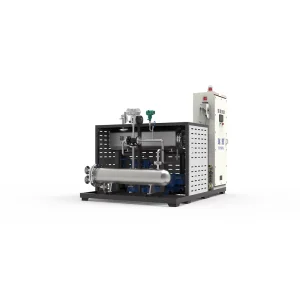
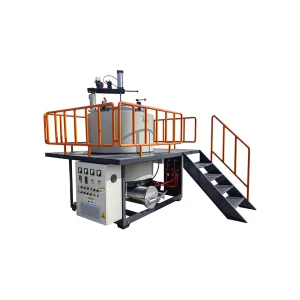
In chemical synthesis, keeping process temperatures within strict limits is critical to preventing polymer degradation or runaway reactions. Ruiyuan electric thermal oil systems supply stable heat to jacketed polymerization reactors. Integrating a RYAN Thermal Oil Heating System TCU ensures precise temperature control to ±0.5°C, ensuring uniform polymer quality.
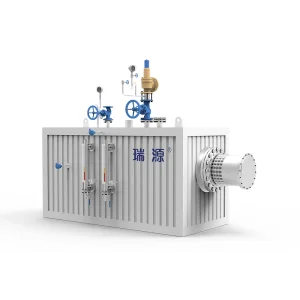
Synthetic fiber manufacturing requires highly uniform heating across spinning beams and platens. Our biphenyl steam generators leverage vapor-phase organic heat carrier thermodynamics. Operating at high temperatures under low pressures prevents localized hot spots, ensuring consistent fiber tensile strength and diameter.
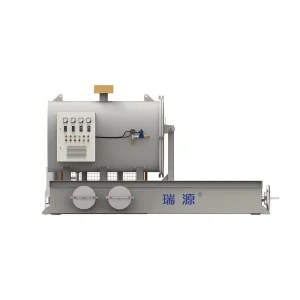
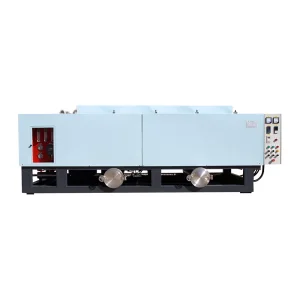
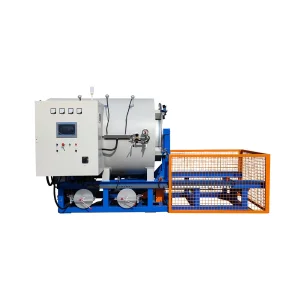
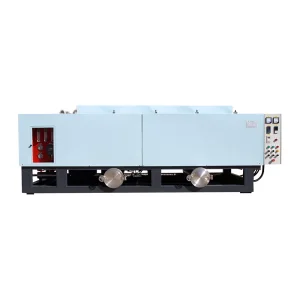
Precision tooling like extrusion dies, spinnerets, and filter bundles regularly become clogged with stubborn polymer residue. Standard mechanical cleaning methods can damage expensive, high-tolerance tooling surfaces. Our vacuum cleaning furnaces heat components under vacuum conditions to thermally decompose polymers into gaseous byproducts, restoring components without wearing down metal structures.
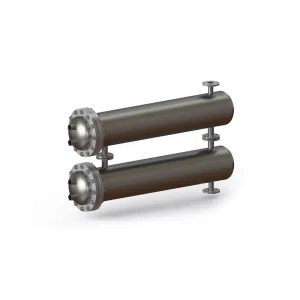
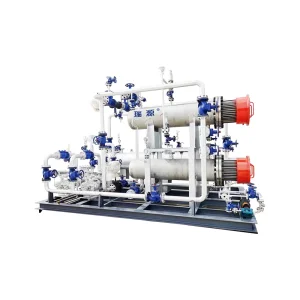
Storing and transporting heavy crude oils or bitumens requires consistent heating to maintain flowable viscosities. Our skid-mounted electric pipe heaters and thermal oil circulation loops heat terminal pipelines and storage vessels, ensuring smooth product transfer while minimizing pipeline friction losses.
Clear, authoritative answers to the most common technical questions asked by project engineers, operators, and procurement teams.
Browse our selection of specialized cleaning systems, high-efficiency heaters, and precise heat exchangers designed for demanding industrial applications.