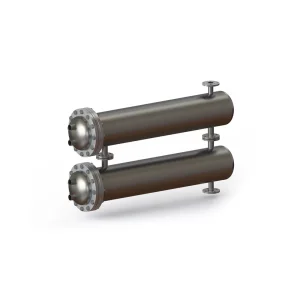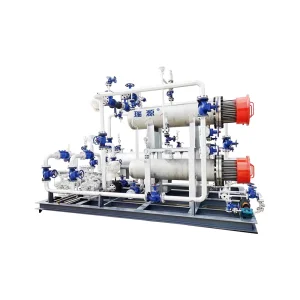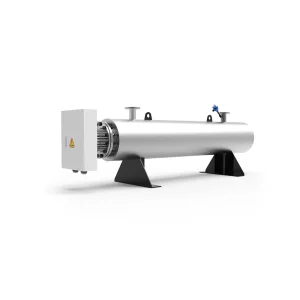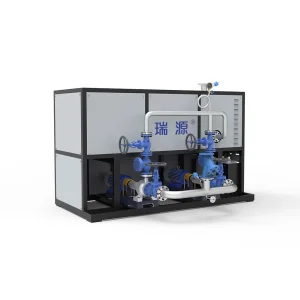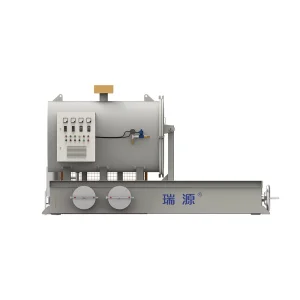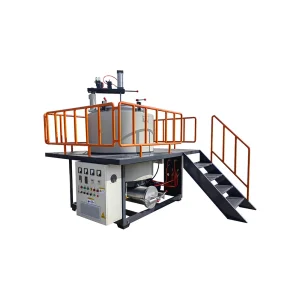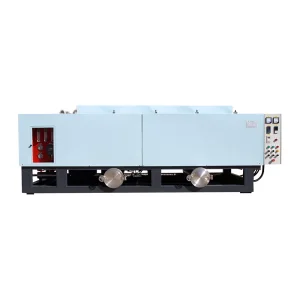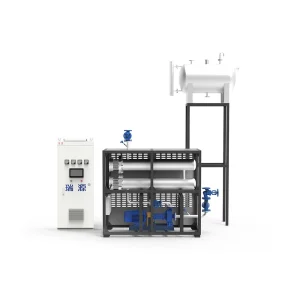
Explore our premium product portfolio featuring custom-engineered thermal heaters, steam generators, and vacuum cleaning systems designed for global industrial deployment.
Analyzing thermal efficiency demands, carbon transition, and high-capacity process heating challenges in modern manufacturing.
In the contemporary global manufacturing sector, process heating represents the backbone of heavy industries, accounting for over 60% of the total energy consumed within manufacturing. Traditionally reliant on coal or direct-fired fossil fuels, modern process plants are undergoing a profound paradigm shift. Driven by rigorous international environmental mandates, carbon neutrality goals, and the pursuit of operational efficiency, the demand for high-capacity, precise, and electrically-driven oil industrial heaters has escalated significantly.
Unlike steam systems, which require exceptionally high pressure to achieve elevated process temperatures, thermal oil heating systems (also known as organic heat transfer fluid systems) operate at near-atmospheric pressures while providing operating temperatures up to 350°C and beyond. This eliminates the safety risks, high maintenance costs, and water treatment chemistry complexities typical of high-pressure boiler operations. By utilizing electric elements to indirectly heat the thermal fluid, manufacturers can achieve optimal thermodynamic efficiency, precise temperature zoning, and zero localized emissions, bridging the gap between high-capacity output and sustainability.
Thermal fluids exhibit unique characteristics that make them ideal for sensitive, heavy-duty processing operations. They provide high thermal stability, uniform heat distribution, and long-term operating life if maintained below their thermal cracking limits. In applications requiring precise temperature zones—such as plastic extrusion, synthetic fiber spinning, or pharmaceutical synthesis—even a minor temperature variance of ±2°C can lead to massive product degradation, chemical instability, or mechanical failures. Thus, the selection of advanced thermal oil heating equipment represents a critical business decision affecting product yields and plant safety.
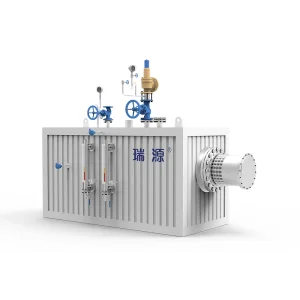
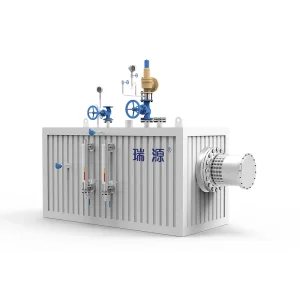
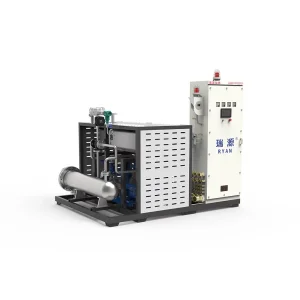
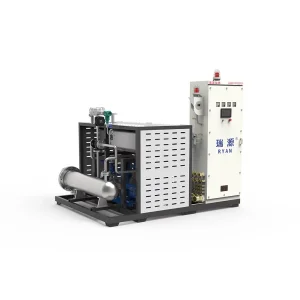
Jiangsu Ruiyuan Heating Equipment Technology Co., Ltd. is a Chinese manufacturing company specializing in research and development, production, sales and after-sales service. With over 30 years of experience in boiler R&D and manufacturing, Ruiyuan specializes in industrial electric heating equipment. Its product range includes electric thermal oil heaters, vacuum cleaning furnaces, air heaters, biphenyl steam generator, and related accessories.
“integrity as our foundation, quality as our key to success, keeping pace with the times, and continuous innovation” — This is our corporate culture and business philosophy.
Industrial manufacturing plants globally encounter massive losses due to inefficient thermal architecture. At Jiangsu Ruiyuan, we have spent decades engineering out these exact system failures, primarily assisting customers in resolving four key challenges:
Advanced PID algorithms control thyristor SCR power systems to achieve a precision rate of ±0.5°C, preventing fluid cracking.
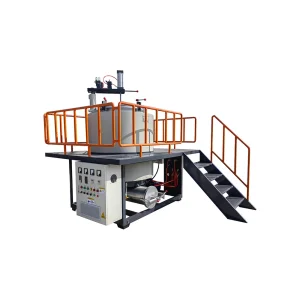
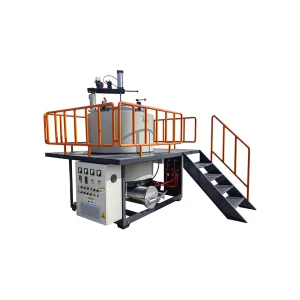
Vacuum cleaning furnaces vaporize complex polymers safely without structural or thermal distortion of delicate spinnerets.
High-efficiency electric tracing & jacketed pipe heating systems preserve fluid dynamics of heavy oils and high viscosity fluids.
We configure custom footprint capacities, multi-zone loops, and distinct electrical voltages to meet tailored specifications.
Deploying advanced heating architectures across petrochemical, synthetic polymer, and chemical processing facilities worldwide.
In refining and petrochemical storage facilities, maintaining heavy crude and bitumen at pumpable viscosities is a constant operational challenge. Ruiyuan's heavy oil industrial pipe heaters utilize precise watt-density designs. Low watt-density electric immersion heaters avoid thermal degradation of the oil envelope adjacent to the heating element, preventing carbonized coking which acts as an insulating barrier and causes element burnout. Our systems are engineered to manage cold-start viscosity curves with step-loaded heating configurations.
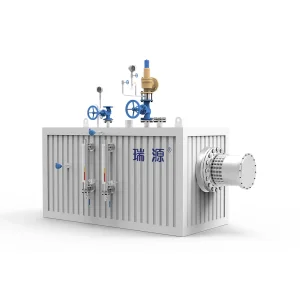
For synthetic fiber lines (Polyester, Nylon, Spandex), uniform temperature management is the key driver of fiber tensile strength and consistency. Ruiyuan's Biphenyl Steam Generators leverage the high latent heat transport capacity of gaseous biphenyl mixtures. The biphenyl vaporizes at precise temperatures, condensing uniformly on polymer spinning manifolds, maintaining temperature variations to under ±0.3°C across multiple spinning heads. Furthermore, post-extrusion filter plates and spinnerets suffer from polymer buildup. The Ruiyuan Vacuum Cleaning Furnace solves this through clean vacuum pyrolysis, decomposing polymer chains into harmless gases under vacuum at 450°C-500°C without mechanical erosion or heat deformation.
| Heating Technology | Target Fluid / Medium | Operating Temp Range | Primary Application |
|---|---|---|---|
| Electric Thermal Oil Heater | Synthetic / Mineral Heat Transfer Oil | 100°C – 350°C | Reactor Jackets, Press Platen Heating, Rollers |
| Biphenyl Steam Generator | Biphenyl / Diphenyl Oxide Mixture | 250°C – 380°C | Polyester Spinning Pack, Synthetic Fiber Lines |
| Vacuum Cleaning Furnace | Polymer Pyrolysis (Vacuum Airless) | 350°C – 550°C | Spinneret Cleaning, Melt-blown Die Plate Restoration |
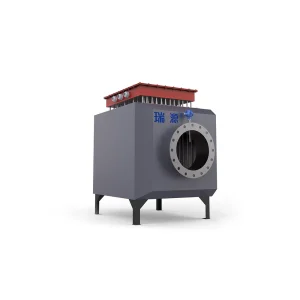
| Electric Pipe/Duct Heater | Heavy Hydrocarbons, Process Air/Gas | 50°C – 250°C | Viscosity Management, Hot Air Dryers, Duct Systems |
Batch chemical synthesis often requires rapid heating cycles to initiate reactions, followed immediately by controlled cooling to prevent runaway exothermic conditions. Ruiyuan's integrated Thermal Control Units (TCU) with cooling functions utilize secondary heat exchangers paired with cold thermal oil loops. The system dynamically switches between heating and cooling circuits under PLC guidance, protecting glass-lined reactors and ensuring product safety.
How we are developing the next generation of industrial process heaters for a low-carbon, smart manufacturing future.
Fully transitioning heavy-duty heating loads from steam boilers to zero-emission electric thermal oil systems. Integration of SCR power controls to optimize energy draw-down based on real-time process demand.
Integrating smart sensors to measure pressure drops, oil degradation markers, and heating element health. Dynamic data output via Modbus/Ethernet to allow remote monitoring, preventing unplanned system shutdowns.
Development of hybrid vaporized biphenyl-electric setups for ultra-high temperature ranges. Utilizing next-generation molten salt technologies to achieve zero-pressure process temperatures exceeding 500°C.
Deploying industrial systems in compliance with rigorous engineering and safety standards across Europe, the Americas, and APAC.
Designed to comply with ATEX, IECEx, and China GB3836 codes. Enclosures are custom engineered for Class I, Div 1 / Zone 1 locations, ensuring operations in volatile petrochemical environments.
Adherence to ASME Section VIII Division 1, CE-PED (Pressure Equipment Directive), and local GB standards. All welds undergo 100% radiographic NDT testing to ensure joint integrity.
We provide global engineering installation support, field commissioning, loop optimization, and customized maintenance training for local operational crews.
Get answers to common engineering questions regarding the design, operation, and optimization of thermal oil systems.
Thermal oil systems operate at high temperatures (up to 350°C and higher) under very low, near-atmospheric system pressures. In contrast, steam requires a pressure of approximately 150 bar to reach 340°C. This makes thermal oil systems inherently safer, easier to maintain, free of corrosion issues, and exempt from strict operator certification laws mandatory for high-pressure boiler operations.
Thermal oil degrades via oxidation and thermal cracking. Cracking occurs when the bulk fluid or film temperature exceeds the manufacturer's specified cracking point, producing low-boiling components and carbon soot. Ruiyuan avoids this by designing heating systems with a low surface watt density (typically under 2.0 W/cm²) and employing high fluid circulation speeds to limit maximum boundary film temperatures.
The biphenyl steam generator utilizes a closed-loop system where synthetic organic heat transfer fluid (biphenyl-diphenyl oxide mixture) is vaporized. When the gas contacts the cooler surfaces of synthetic fiber spinning manifolds, it condenses. Since condensation occurs at a constant saturation temperature corresponding to the system pressure, it guarantees extreme thermal uniformity (often within ±0.3°C) across complex manifolds.
Ruiyuan's explosion-proof heaters incorporate robust protective barriers, including Ex-d (flameproof) terminal enclosures, heavy-duty mineral-insulated (MI) heating elements, dual-contact high-temperature limit thermocouples inside the heating tubes, and flow rate sensors. These safety interfaces are designed to trip the system instantly in the event of low flow or over-temperature detection.
Depending on the specific polymer type (e.g., PP, PET, Nylon, Spandex) and mass of the component, a typical vacuum cleaning run lasts between 3 to 6 hours. The process works via vacuum pyrolysis at 450°C-500°C, melting and gasifying most of the polymer, followed by a controlled oxidation cycle to polish away remaining carbon deposits without structural thermal damage.
Discover our specialized range of heat exchangers, thermal control units, pipe heaters, and custom vacuum calcination ovens.