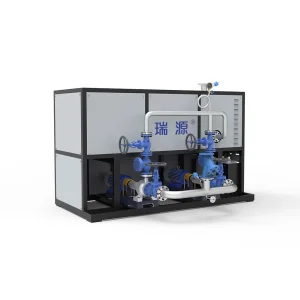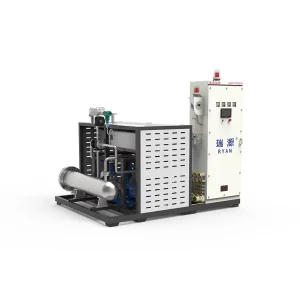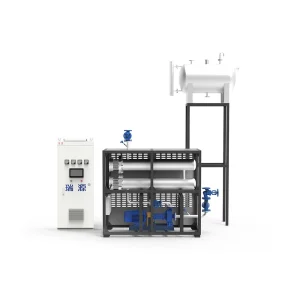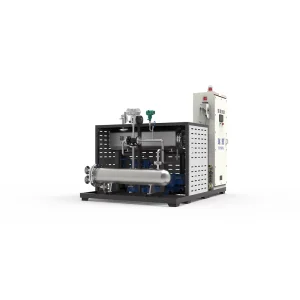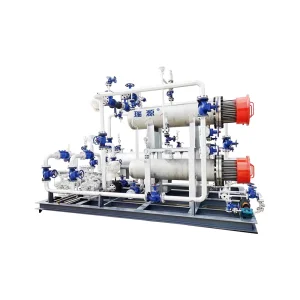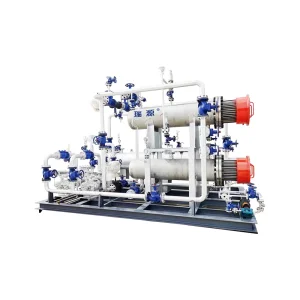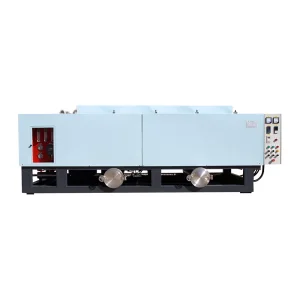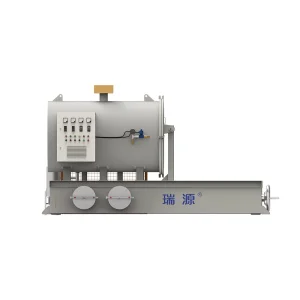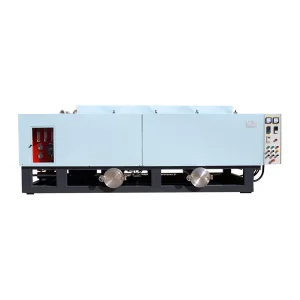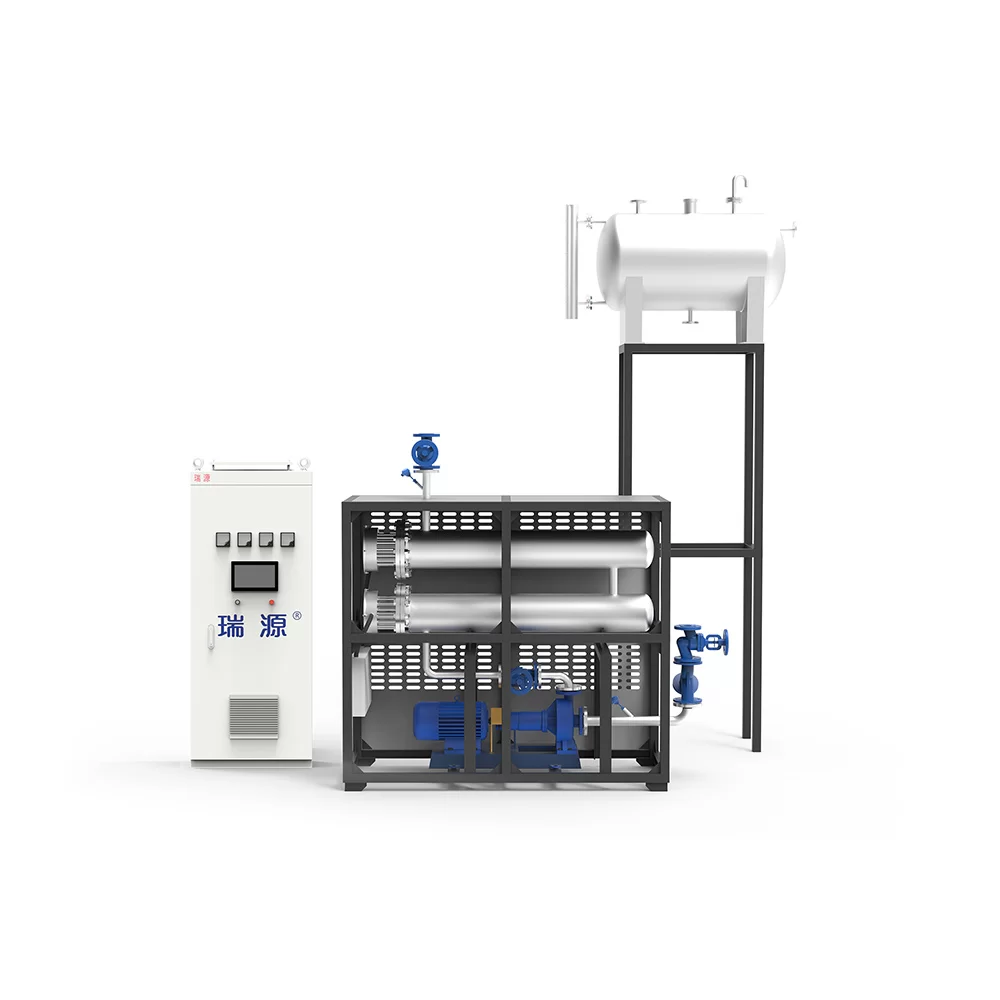
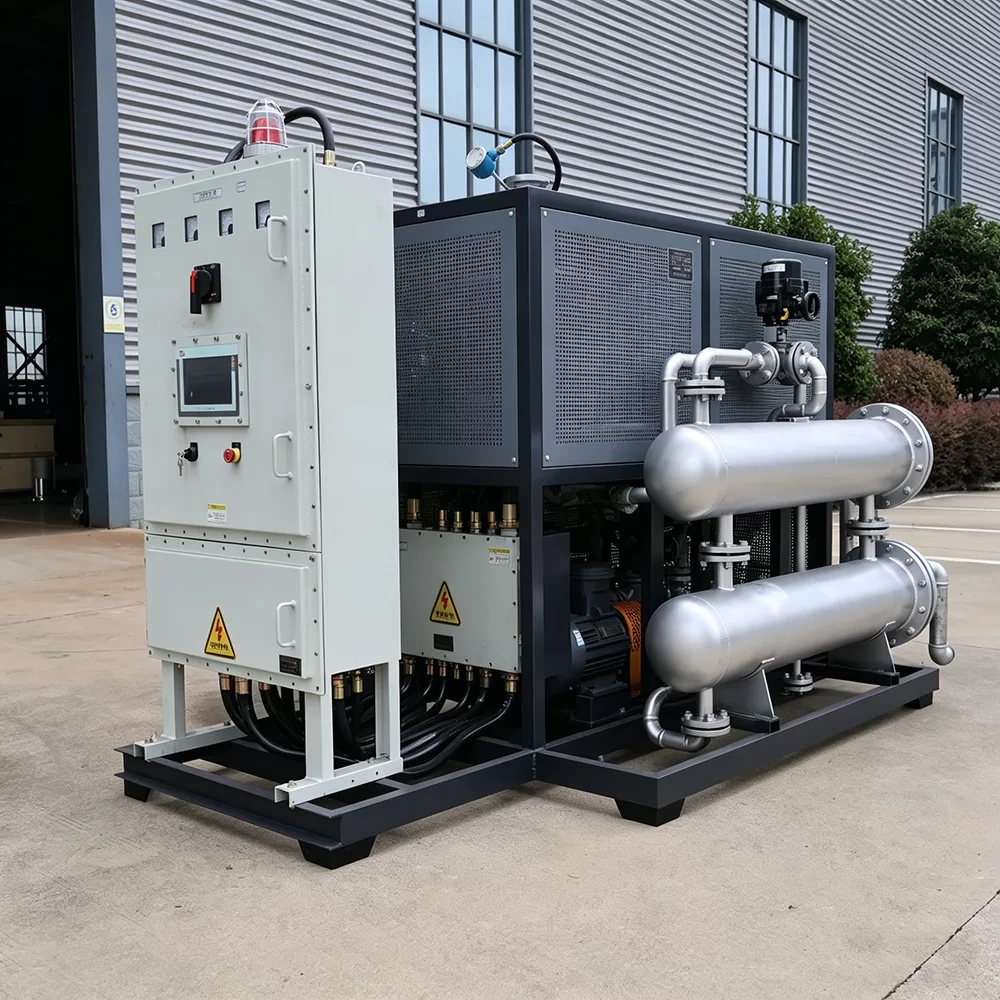
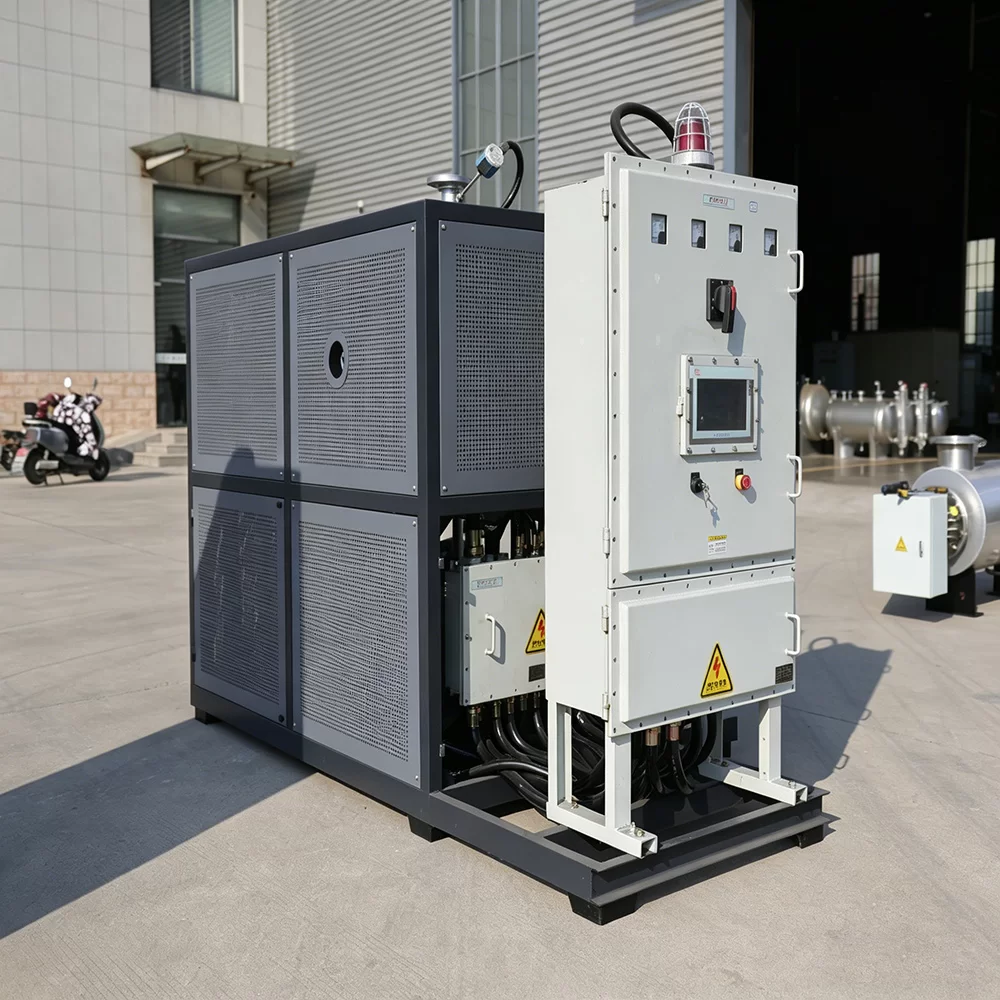
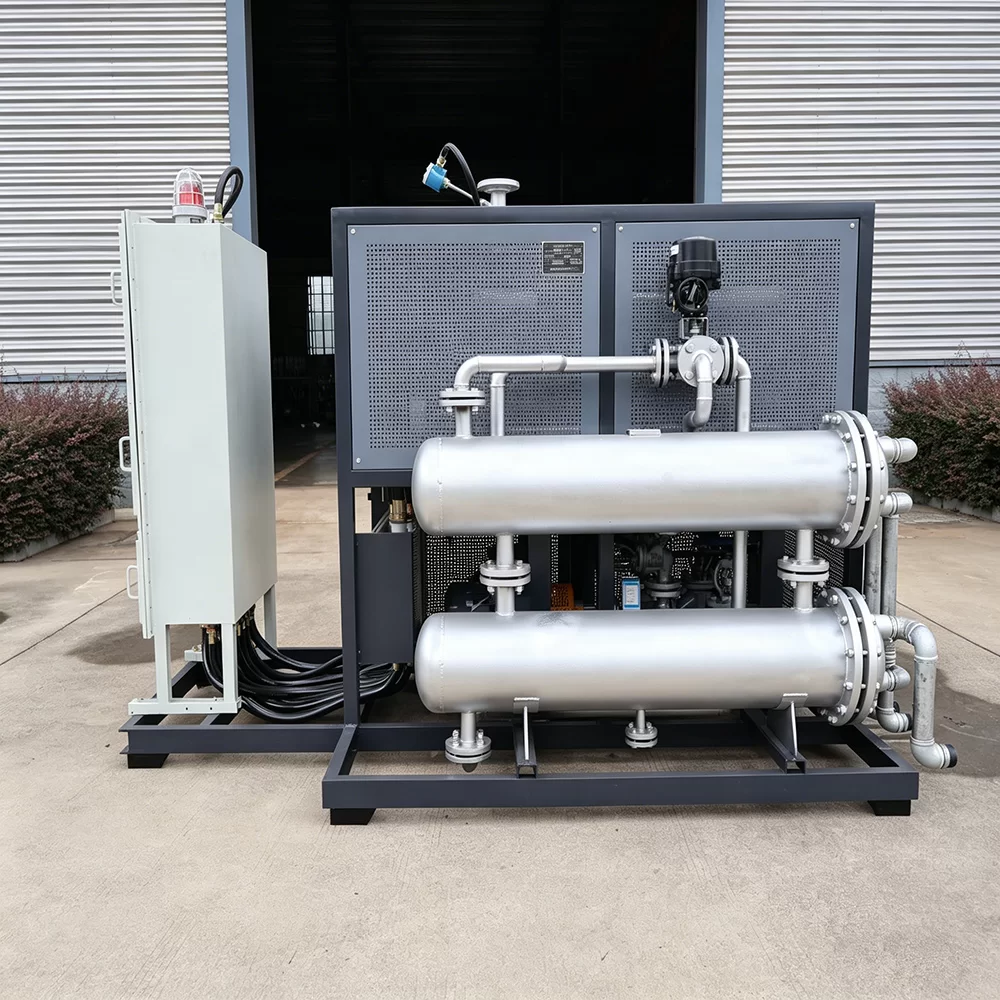
RYAN Industrial Thermal Oil Heater with Cooling Function – Precise Temperature Control

Industrial thermal oil heater, which combines heating and cooling functions, incorporates a heat exchanger into the original heater design, enabling precise temperature control and rapid response.

Product Description

Product Description

This Electric Thermal Oil Heater with Cooling Function is an advanced closed-loop temperature control system designed for industrial processes requiring both heating and cooling within a single unit. Unlike standard thermal oil heaters which only provide heating, this integrated system allows for rapid temperature changes and precise thermal management throughout the entire production cycle.

How It Works

The system utilizes electric heating elements to raise the temperature of thermal oil, while an integrated cooling circuit (typically using water or air as the cooling medium) rapidly removes excess heat when temperature reduction is required. A dedicated control valve regulates the flow between the heating and cooling circuits, ensuring smooth and accurate temperature transitions.

Key Features
Heating & Cooling Integration Two functions in one unit, eliminating the need for separate equipment.
Precise Control Achieves ±1°C accuracy across the full operating range for consistent results.
Fast Response Time Rapid switching between heating and cooling modes minimizes process waiting time.
Energy Efficient Recovers heat from cooling cycles where applicable, reducing overall consumption.
Safety Protections Over-temperature, over-pressure, and low-flow alarms included as standard.
Compact Footprint Integrated design saves valuable floor space compared to separate systems.
Why Choose the Integrated Version?

For processes that require both temperature increase and decrease within the same batch or cycle, a separate heater and chiller would typically be needed. This integrated unit offers:

  • Lower initial investment compared to purchasing two separate systems
  • Easier operation and maintenance through a single control interface
  • Reduced piping and footprint in your production facility
Standard vs. Cooling Function Model
Feature Standard Model Cooling Function Model
Heating
Cooling ×
Temperature ramp-down rate Slow (natural cooling) Fast (active cooling)
Best for Continuous heating processes Batch processes with heating & cooling cycles
Frequently Asked Questions
What is the primary benefit of the integrated heating and cooling system?
The primary benefit is the ability to manage rapid temperature transitions within a single machine, which improves production efficiency for batch processes and significantly reduces equipment footprint.
How precise is the temperature control in this unit?
Our system utilizes a digital PID controller with auto-tuning to achieve a high precision of ±1°C throughout the entire operating temperature range.
What cooling mediums can be used with this system?
The integrated cooling circuit is versatile and typically utilizes either water or air as the cooling medium, depending on your specific industrial requirements.
Is this system more energy-efficient than separate units?
Yes. By integrating both functions, the system can recover heat from cooling cycles where applicable and reduces the energy loss associated with extensive external piping.
What safety features are standard on these heaters?
Safety is paramount. Standard features include over-temperature protection, over-pressure sensors, and low-flow alarms to ensure stable and secure operation at all times.
Is it difficult to maintain an integrated system?
On the contrary, maintenance is easier because there is only one control interface to monitor and one primary unit to service, compared to maintaining a separate heater and a separate chiller.

Related Products