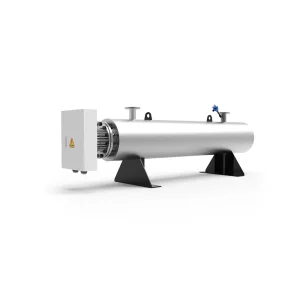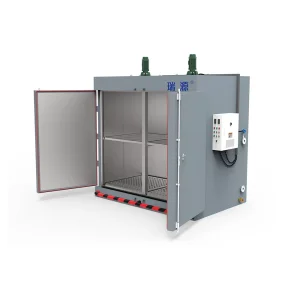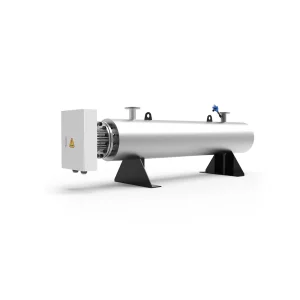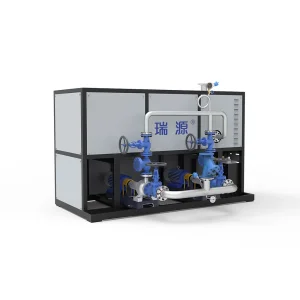
Thermal Oil Heater Factory & Exporter for United States

High-Precision Industrial Heating Systems & Eco-Friendly Vacuum Cleaning Furnaces Built to ASME & UL Standards

30+

Years of Boiler & Heater R&D

±0.5°C

Precision TCU Temp Control

100%

ASME & Custom US Compliance

1200+

Global Industrial Installations

United States Industrial Landscape: High-Temperature Thermal & Polymer Cleaning

The manufacturing sectors in the United States—ranging from polymer extrusion in the Ohio Valley to chemical processing along the Gulf Coast and advanced aerospace composites in Seattle—require highly precise and safe thermal process control. Standard off-the-shelf thermal oil heaters and outdated solvent-based cleaning methods are no longer sufficient to meet these demands.

In response to stringent EPA regulations and OSHA safety standards, US industries are rapidly shifting toward closed-loop electric thermal oil heaters and eco-friendly vacuum calcination cleaning systems. Industrial operations require heating equipment that operates seamlessly within automated PLC configurations, provides superior thermal efficiency, and eliminates local greenhouse emissions. For manufacturing facilities processing modern polymers, PET, PEEK, and nylon, the necessity for high-temperature calcination ovens that preserve mechanical integrity without altering tooling tolerances is critical.

At Jiangsu Ruiyuan Heating Equipment Technology Co., Ltd., we design, engineer, and build systems to meet this operational transition, offering robust non-standard manufacturing solutions that conform directly to American industrial requirements.

Compliance & Technical Standards Supported:

  • ASME Boiler & Pressure Vessel Code (Section VIII) compliance for pressurized oil circuits.
  • UL & CSA Electrical Certifications for integrated heating element bundles and control cabinets.
  • NFPA 87 (Standard for Fluid Heaters) integration for safety design loops.
  • NEMA Rating standards for control box housings and industrial explosion-proof configurations.

Global Trends in Industrial Decarbonization & Electrification

The manufacturing sector globally is transitioning from combustion-based fossil systems to high-performance electric process heaters to achieve carbon neutrality, increase safety, and improve energy efficiency.

Zero Local Carbon Footprint

Electric thermal oil heaters draw from grid or localized renewable energy sources, eliminating the exhaust stacks, thermal plumes, and greenhouse gases associated with gas-fired thermal boilers.

Thermal Fluid Longevity

Our heaters use low watt-density element configurations. This reduces heat flux on the heating tube walls, preventing thermal fluid degradation, carbon deposit buildup, and premature oil breakdown.

Elimination of Toxic Solvents

Vacuum cleaning furnaces degrade polymers thermally, eliminating hazardous solvents like Triethylene Glycol (TEG) and reducing industrial waste disposal costs.

Chinese Factory Manufacturing Efficiency & Customization Power

Jiangsu Ruiyuan Heating Equipment Technology Co., Ltd. leverages a highly integrated manufacturing base to deliver customized heating solutions. While local US fabricators face extended lead times and high material costs, our 30-year production facility optimizes engineering workflows to supply ASME-grade systems efficiently.

Why US Companies Partner with Ruiyuan:

  • Vertical Manufacturing Integration: We design, machine, weld, and inspect all pressure vessels, electrical panels, and thermal structures within our own facility.
  • Rapid Engineering Adaptability: Our dedicated R&D division converts American schematics, process requirements, and fluid properties into robust 3D designs within days.
  • Quality Control Protocols: Each thermal system undergoes continuous testing, including full radiographic weld inspection, hydrostatic pressure evaluation up to 1.5x design limits, and complete thermal loop calibration.

Original Corporate Core Culture

"Integrity as our foundation, quality as our key to success, keeping pace with the times, and continuous innovation."

With over 30 years of experience in industrial heating R&D and manufacturing, Jiangsu Ruiyuan focuses on resolving four primary engineering challenges for global clients:

  • Inaccurate heating profiles and unstable temperature control loop behaviors.
  • Inefficient cleaning of high-temperature polymer tooling.
  • Slow thermal startup transitions in critical product pipelines.
  • Long lead times and high engineering costs for non-standard equipment sourcing.

Localized Application Scenarios in the USA

Polymer & Synthetic Fiber Industry

Southeast Region (Carolinas, Georgia): Used in melt spinning, nonwoven polyester manufacturing, and extrusion. Ruiyuan vacuum furnaces safely clean spinneret plates, blow-out dies, and filter packs, removing polymers without damaging close-tolerance metal surfaces.

Chemical & Petrochemical Refining

Gulf Coast Region (Texas, Louisiana): Used for high-temperature fluid heating in process reactors, bitumen terminals, and heavy organic synthesis. Skid-mounted electric heaters provide precise thermal regulation for heavy oils and asphalt processing.

Automotive Composites & Battery Systems

Midwest Region (Michigan, Ohio): Used for heating resin tanks, thermal curing of automotive structural carbon fibers, and precise temperature regulation for battery-grade chemical processes.

Engineering & Sourcing Guidelines for US Buyers

When sourcing industrial thermal fluid heaters and vacuum cleaning furnaces for the United States market, engineering managers must focus on safety, efficiency, and compliance.

1. Skid-Mounted System Integration

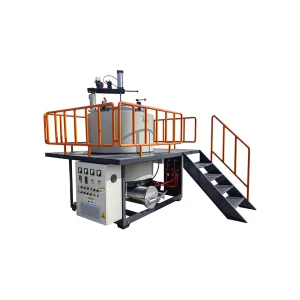
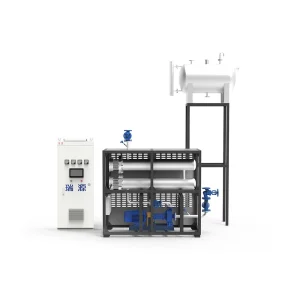
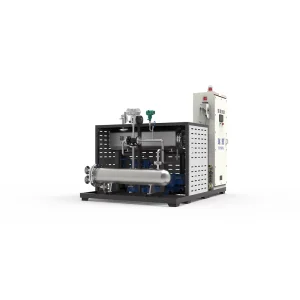
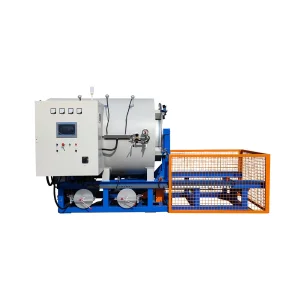
Minimize field labor costs by choosing complete, skid-mounted heating and cooling assemblies. Our units integrate the heating vessel, circulation pumps, expansion valves, cold-seal tank, bypass structures, and control panels on a single, heavy-duty structural steel base.

2. Control Panel & SCADA Networking

US facilities require advanced data-logging and remote access interfaces. We configure our control panels to interface with SCADA systems using Modbus, Ethernet/IP, or Profinet protocols. The control cabinets include SCR power controllers for continuous watt control, extending heating element lifespan and preventing fluid overheating.

3. Low Watt-Density Configuration

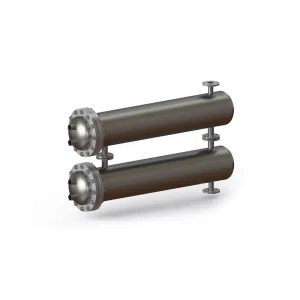
To avoid fluid cracking, heat exchangers must keep heat flux values below 12-15 W/in² (2.0-2.3 W/cm²). Our electric heating bundles are configured with wide element spacing to ensure laminar flow velocities and prevent fluid hotspots.

4. High-Vacuum Calcination Chambers

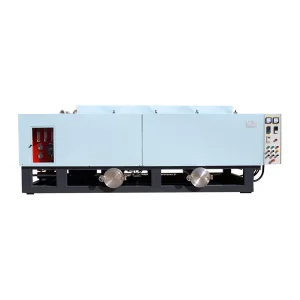
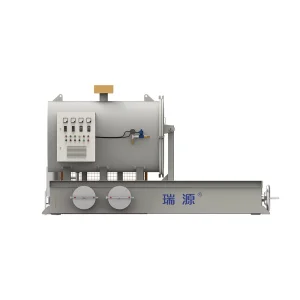
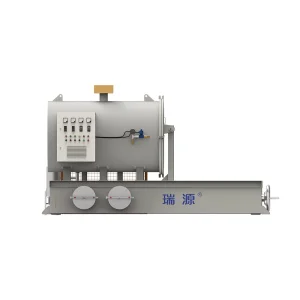
For polymer-removal operations, maintaining chamber pressures below -0.08 MPa is essential. Our vacuum calcination furnaces are built with dual-stage vacuum pumps, integrated water scrubbers, and PLC safety interlocks to ensure clean, smoke-free operation.
Frequently Asked Questions

How does a vacuum cleaning furnace differ from a standard thermal burn-off oven?
A vacuum cleaning furnace operates in a controlled vacuum environment (low oxygen), which reduces the rate of combustion. This prevents local flame generation and localized hotspots, which can warp or damage delicate tooling like spinnerets and extrusion dies. Rather than burning the polymer directly, the process uses thermal degradation (pyrolysis) and vacuum extraction, leaving only a small amount of carbonized residue that can be easily washed away. This technique preserves the mechanical properties and dimensional tolerances of high-cost components.
What is the maximum operating temperature of Jiangsu Ruiyuan electric thermal oil heaters?
Our standard electric thermic fluid heater units are designed to operate at process temperatures up to 350°C (662°F) under low pressure. For specialized applications requiring higher temperatures, we design systems utilizing synthetic organic heat transfer fluids that can reach up to 400°C (752°F). All systems feature SCR power control panels to regulate temperatures within ±0.5°C of the setpoint.
Can your equipment be certified to meet ASME and UL standards for US installations?
Yes. We design and manufacture all structural pressure components in compliance with ASME Section VIII, Division 1. For electric control cabinets, we source high-quality components and build panels to UL 508A and NEMA 4/4X standards to ensure compliance with local electrical codes.
What safety systems are integrated to prevent fluid overheating or thermal degradation?
Our safety systems operate on three levels: first, a low flow rate sensor automatically shuts down the heating loop if fluid velocity drops below a safe margin. Second, redundant high-temperature thermocouples monitor both the internal heating element sheath temperature and the bulk fluid outlet temperature. Third, pressure relief valves and automatic expansion tank venting protect the closed-loop system from unexpected pressure spikes.
How do you clean the exhaust emissions from the vacuum calcination furnace?
The system routes pyrolyzed off-gas through an integrated multi-stage treatment loop. This configuration includes a high-efficiency water spray scrubber to condense heavy fractions, followed by an optional activated carbon adsorption bed or secondary thermal afterburner. This setup keeps emissions within local EPA limits, venting clean air to the atmosphere.
How long is the typical production and export lead time to the United States?
The timeline for custom-engineered systems is typically 8 to 12 weeks for detailed design, fabrication, and performance testing, followed by 3 to 4 weeks for ocean freight to major US ports. We handle standard customs clearance processes and can deliver directly to your facility.