Engineered for high-volume polymer processing, advanced automotive parts calcination, and heavy-duty marine hardware maintenance.
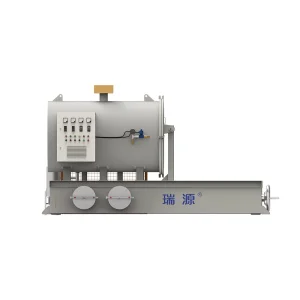
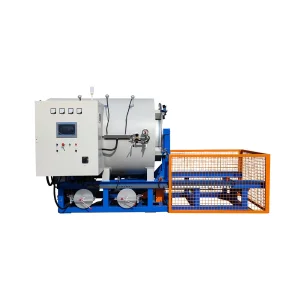
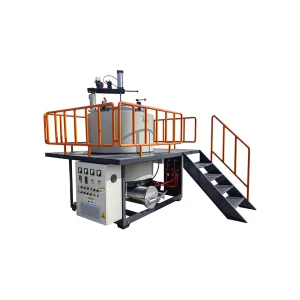
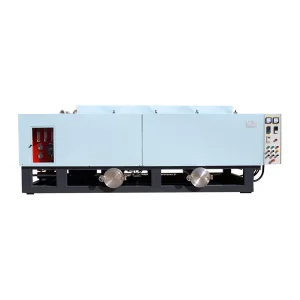
Busan, the primary logistical and industrial gateway of South Korea, hosts major complexes like the Noksan National Industrial Complex and the Mieum Industrial Complex. These zones drive advancement in marine logistics, automotive component engineering, synthetic polymer extrusion, and heavy metal metallurgy. In these precision-driven industries, components such as spinnerets, extrusion dies, filter elements, and mechanical pumps require routine, non-destructive cleaning to remove tough polymer and organic residues.
Traditional clean-off processes—such as chemical solvent immersion (using toxic reagents like TEG) or open-air thermal burn-off—no longer align with South Korea's strict environmental regulations. The Korean Occupational Safety & Health Agency (KOSHA) along with local environmental bodies enforce tight limits on VOC emissions and chemical waste. Jiangsu Ruiyuan Heating Equipment Technology Co., Ltd. answers this challenge with advanced Vacuum Cleaning Furnaces designed to deliver clean, efficient, and damage-free thermal cleaning directly to the Busan market.
Our systems utilize precise vacuum pyrolysis. Under reduced pressure, polymers decompose cleanly at lower temperatures. This avoids the mechanical stresses, micro-cracks, and warps associated with uncontrolled high-temperature burn-off ovens, preserving the integrity of expensive tooling and processing dies.
Understanding the science behind thermal decomposition under vacuum and how it eliminates thermal stress on alloy steels.
By dropping vacuum chamber pressure down to -0.096 MPa, polymer melting and vaporization points decrease. The organic matrix undergoes clean thermal cracking without combustion, eliminating fire risk and soot accumulation.
Utilizes our specialized Temperature Control Unit (TCU) to regulate heating elements and thermal fluid loops. High thermal uniformity prevents local hot spots, safeguarding high-precision mechanical parts.
Thermal off-gases bypass the heating chamber into a water-cooled condensing unit. High-boiling-point residues condense into liquid collection tanks. Trace vapors route through activated carbon filters for clean exhaust.
Ruiyuan's engineering team designs and manufactures tailored machinery to resolve challenging processing and cleaning bottlenecks.
Ruiyuan Solution: Our thermal systems feature advanced PLC controllers paired with solid-state relays (SSRs). Dynamic PID algorithms adjust power output continuously, ensuring the thermal chamber remains within ±0.5°C of the target temperature profile to protect heat-sensitive materials.
Ruiyuan Solution: High-molecular-weight polymers like PET, PBT, Spandex, and Kevlar typically resist standard solvents. Our vacuum calcination chambers crack these polymer chains directly into vapor, leaving only a trace amount of easily vacuumed inorganic ash on target parts.
Ruiyuan Solution: High-viscosity lines frequently experience cold spots and polymer freezing. We supply jacketed pipes and high-capacity thermal oil circulation systems that deliver rapid heat transfer and eliminate cold boundaries.
Ruiyuan Solution: Every production line has unique physical and thermal parameters. Over 50% of our production runs consist of custom designs. We handle structural modifications, custom loading configurations, high-vacuum capabilities, and hazardous location certifications (KCs / KOSHA Ex-proof) in-house.
Jiangsu Ruiyuan operates a modern production facility optimized for industrial heating systems and pressure vessel manufacturing. Our manufacturing process integrates lean methodologies with automated machining centers to ensure high dimensional accuracy and repeatable quality. This allows us to offer premium systems at competitive price points compared to European and Japanese alternatives.
Our strategic facility location near major shipping lanes enables efficient export delivery. Standard spare parts and replacement heaters are stocked for rapid dispatch, minimizing operational downtime for our Korean clients. We coordinate closely with Busan-based customs agents and port logistics providers to manage all import documentation, customs clearance, and local transit requirements.
Delivering reliable service, compliance documentation, and engineering support for our Korean industrial partners.
We supply complete engineering dossiers, material test reports (MTRs), and electrical schematics aligned with South Korean safety standards. Our electrical enclosures, heating systems, and safety valves can be certified to meet local pressure vessel regulations, ensuring smooth safety reviews and factory audits.
Ruiyuan provides remote commissioning support, complete with step-by-step videos, PLC network assistance, and digital documentation. For complex installations, we coordinate with specialized Korean mechanical contractors to manage assembly, wiring, and start-up tuning.
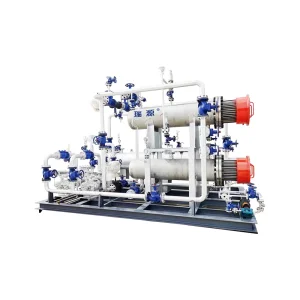
Explore our full range of electric thermal oil systems, vacuum furnaces, steam generators, and industrial exchangers.
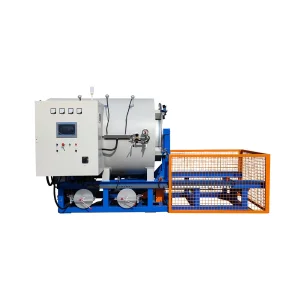
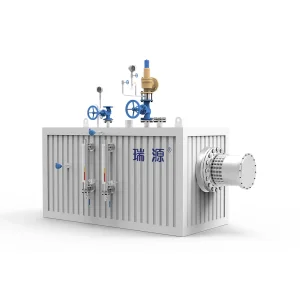
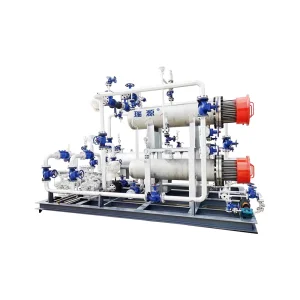
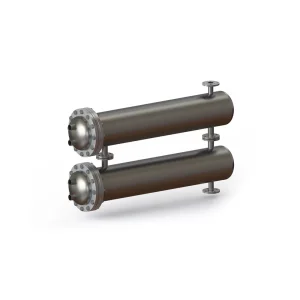
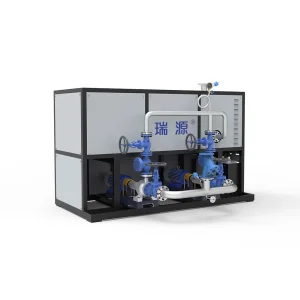
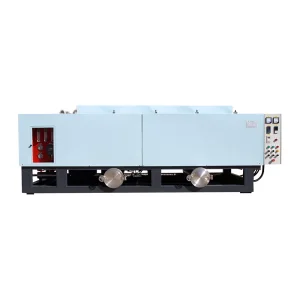
Compare the operational efficiency, safety, and environmental impact of modern vacuum pyrolysis against traditional cleaning methods.
| Evaluation Parameter | Ruiyuan Vacuum Pyrolysis Furnace | TEG Chemical Solvent Bath | Traditional Burn-Off Ovens |
|---|---|---|---|
| Cleaning Principle | Vacuum thermal decomposition (Pyrolysis) | Boiling triethylene glycol solvent dissolving | Direct combustion in air |
| Tooling Stress / Damage Risk | None. Gradual, uniform heating in vacuum. | Low mechanical risk, high corrosion hazard. | High. Local overheating causes warps. |
| Environmental & Safety Profile | Zero VOC emissions; closed-circuit water filtration. | Toxic chemical vapors, hazardous waste disposal. | Pungent smoke, high emissions, fire risk. |
| Energy Efficiency | High. Vacuum chamber minimizes heat loss. | Moderate. Constant heat to boil liquid. | Low. Continuous flue exhaust heat loss. |
| Labor & Handling Cost | Minimal. Automated PLC controls. | High. Chemical handling and post-washing. | Moderate. Manual carbon ash removal. |
Detailed technical answers to help purchasing managers and plant engineers specify thermal processing equipment.
Looking for a custom thermal cleaning solution or need detailed specifications for our vacuum calcination furnaces? Our team of engineers is ready to assist you.
Send Inquiry Now