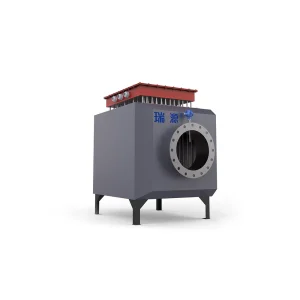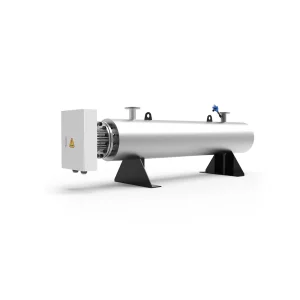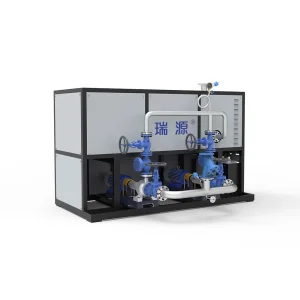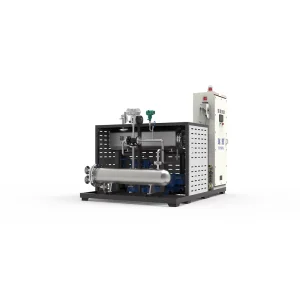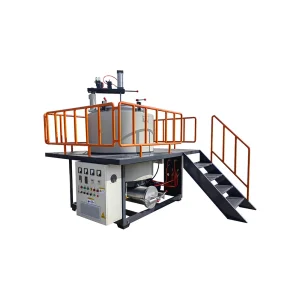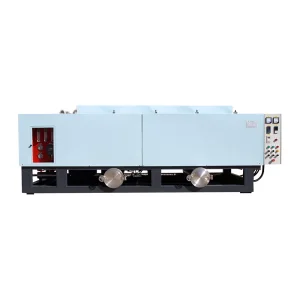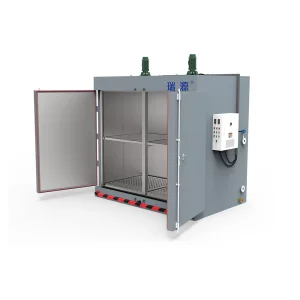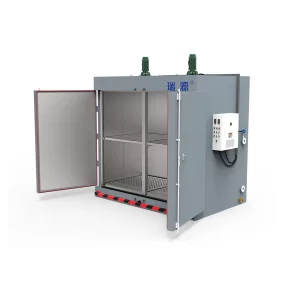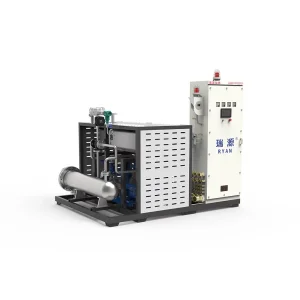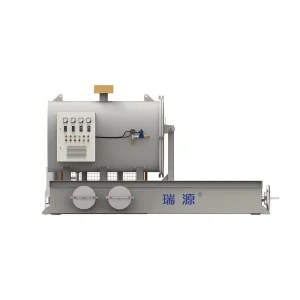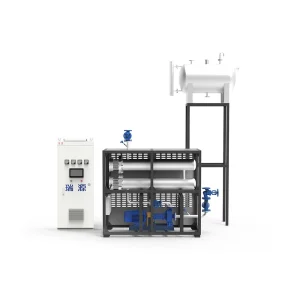
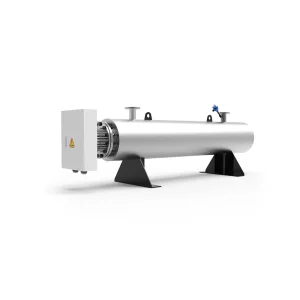
Explore our industrial-grade electric pipe heaters, vertical thermal oil units, and vacuum cleaning solutions engineered for high performance.
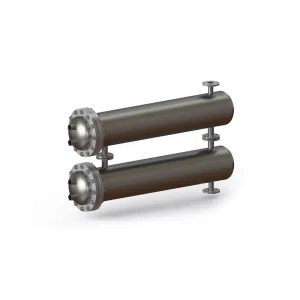
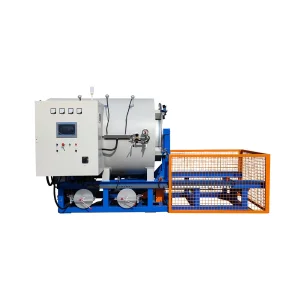
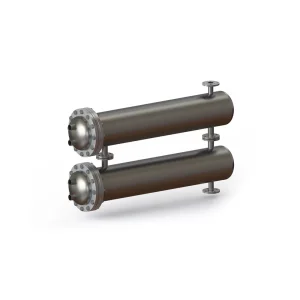
Jiangsu Ruiyuan Heating Equipment Technology Co., Ltd. is a premier Chinese manufacturing company specializing in the comprehensive research, development, custom engineering, sales, and global after-sales service of thermal systems. Built upon the core tenets of "integrity as our foundation, quality as our key to success, keeping pace with the times, and continuous innovation," our corporate culture drives us to deliver high-performance process heating solutions.
With more than three decades of specialized expertise in boiler R&D and heavy manufacturing, Ruiyuan delivers customized industrial electric heating configurations. Our advanced product range includes electric thermal oil heaters, vacuum cleaning furnaces, duct air heaters, biphenyl steam generators, and highly engineered auxiliary components.
We specialize in helping international engineering, procurement, and construction (EPC) firms resolve four major operational challenges:
How we address critical pain points across diverse process manufacturing environments.
Thyristor (SCR) power control systems ensuring ±0.1°C thermal stability in highly critical processing reactors.
Vacuum calcination technology that safely pyrolyzes polymer residues from metal parts without warp risk.
Specialized heavy oil heating bundles and inline electric pipe heaters preventing temperature drop along transit lines.
Custom mechanical, electrical, and thermal sizing of skid-mounted thermal oil loops, engineered to fit tight spatial limits.
In modern industrial processes, the selection, engineering, and deployment of a custom OEM heat transfer fluid system are critical factors determining overall productivity, thermal safety, and energy conservation. Industrial thermal fluids, also known as thermic fluids or organic heat transfer media, are widely deployed to carry heat energy across process piping systems. From petroleum distillation and synthetic polymer manufacturing to high-density air preheating, these systems maintain precise thermal parameters where direct flame heating poses unacceptable explosive or structural risks.
Modern process applications require precise heat transfer fluid flow rates to prevent film degradation. The local boundary layer of the heat transfer fluid must not exceed its maximum film temperature limit, which can lead to thermal cracking or carbon deposits inside the heat exchanger. Our R&D division prioritizes calculated fluid velocity designs to optimize the heat transfer coefficient (h) without causing excessive pressure drop (ΔP).
By employing variable frequency drive (VFD) circulation pumps, our systems maintain a turbulent flow regime (indicated by a Reynolds number Re > 4000) within the electric heater's heat exchange zone. This maintains clean heat transfer surfaces and prevents hot-spotting on the heating element surfaces. Whether utilizing synthetic aromatics, silicone oils, or diphenyl mixture fluids, our engineering team optimizes heat exchanger tube configurations to deliver uniform heat flux rates across the entire process loop.
Targeting turbulent flow (Re > 4000) along the heating element sheath to reduce boundary layer film temperature.
Limiting watt density to 1.5 - 2.5 W/cm² to prevent local cracking of synthetic fluids.
Utilizing SCR power switching to match heat output to varying process demands dynamically.
Operating thermal fluid systems globally requires compliance with safety certifications. For European installations, designs must comply with the Pressure Equipment Directive (PED) 2014/68/EU and the Machinery Directive. For North America, compliance with ASME Section VIII Division 1 pressure vessel codes and UL/CSA electrical panel certifications is mandatory.
Jiangsu Ruiyuan delivers comprehensive engineering packages complete with finite element analysis (FEA), hydro-test records, radiography reports of pressure piping, and structural load calculations. In addition, when systems are installed in hazardous environments (such as Class 1 Division 1/2 or ATEX Zone 1/2), our custom heating bundles are engineered with explosion-proof terminal boxes (Ex d/Ex e) and isolated sensors to meet hazardous location regulations.
"Compliance is not merely about certification; it is about engineering inherently safe systems that protect plant personnel and guarantee process continuity over decades of operation."
Procuring custom OEM heat transfer systems from China offers distinct supply chain advantages. Our factory, located in the industrial cluster of Jiangsu province, has direct access to high-quality raw materials, such as seamless stainless steel tubes (SUS321, SUS316L, SUS310S) and advanced nickel-alloy components. By integrating R&D, structural plate fabrication, CNC orbital welding, and testing facilities under one roof, we significantly reduce production lead times.
This localized supply network, combined with our experienced engineering team, allows us to deliver high-quality, custom-engineered equipment at a lower cost than European or North American competitors. In addition, our close proximity to the major shipping ports of Shanghai and Ningbo ensures reliable and efficient ocean freight delivery for global projects.
The industrial sector is transitioning away from fossil fuel combustion systems toward zero-emission electrical heat generation. Custom electric thermal oil heaters represent a direct path to carbon neutrality. By utilizing green electricity, these systems achieve thermal efficiencies exceeding 98% while eliminating on-site combustion emissions.
Simultaneously, the integration of Industrial Internet of Things (IIoT) sensors allows for predictive maintenance of process fluids. By continuously monitoring parameters such as pressure drop, pump vibration, and fluid viscosity, the control system can alert operators to degradation before a failure occurs. Our smart thermal control panels easily integrate with plant-wide DCS (Distributed Control Systems) or SCADA platforms via Modbus TCP, PROFINET, or EtherNet/IP protocols.
Where high-temperature precision and robust system configurations are non-negotiable.
Indirect preheating of crude oils and bitumens using heavy-duty electric heaters. Keeps viscosity low during transit through extensive pipeline infrastructure without risking focal degradation.
Maintaining temperature zones in polymer extrusion machinery. Utilizing vertical vacuum cleaning furnaces for cleaning spent spinnerets and dies from residual polymer build-up.
Providing uniform surface heating for multi-daylight presses used in composite wood and aerospace panel production. Eliminates cold zones to prevent structural delamination.
Technical guidance regarding process heating integration, OEM sizing, and factory support.
Discover our skid-mounted thermic fluid heaters, high-performance thermal oil ovens, and calcination equipment configured for international industrial plants.