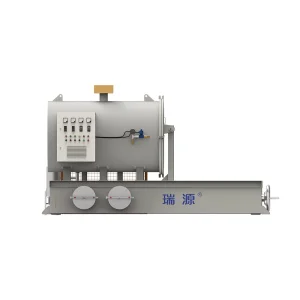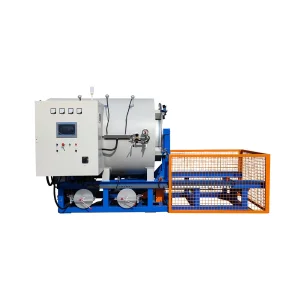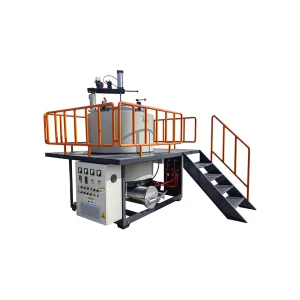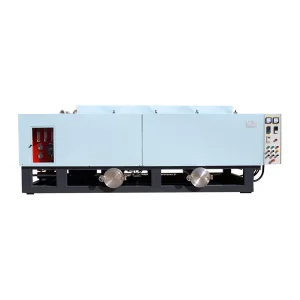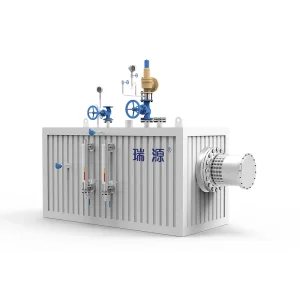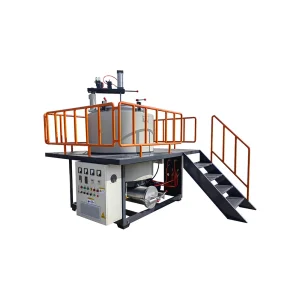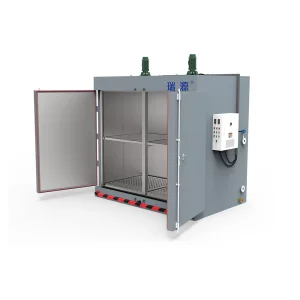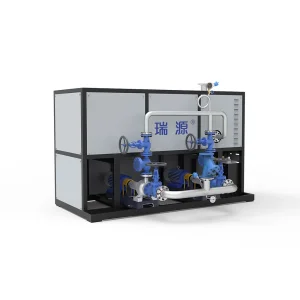
High-performance vacuum calcination technology engineered for the West African market.
As Nigeria solidifies its position as Africa's largest economy, the industrial sector—ranging from plastics and textiles to oil and gas—is undergoing a profound transformation. The demand for "Zero-Waste" manufacturing and high-precision maintenance has catapulted Vacuum Cleaning Furnaces from niche laboratory tools to essential industrial infrastructure. At Jiangsu Ruiyuan Heating Equipment Technology Co., Ltd., we provide the engineering bridge between global innovation and Nigerian industrial localized needs.
Nigeria’s manufacturing sector, particularly in hubs like Lagos, Ogun, and Kano, is shifting toward self-sufficiency. The rapid growth of the domestic plastic packaging industry and the revitalized textile sector (driven by the Central Bank of Nigeria's initiatives) requires advanced polymer removal solutions. Traditional cleaning methods—manual scraping or chemical solvents—are not only labor-intensive but also pose significant environmental risks and damage expensive spinnerets and filters. Our vacuum cleaning furnaces offer a sustainable, automated alternative that aligns with Nigeria's "Green Industry" goals.
Globally, the industrial cleaning market is moving toward "Thermal Decarbonization." Factories in Germany, the USA, and China are replacing traditional burn-off ovens with vacuum technology to reduce CO2 emissions and improve energy efficiency. For Nigerian exporters and factory owners, adopting this technology isn't just about cleaning; it’s about meeting international quality standards (ISO) and reducing the total cost of ownership (TCO) for production lines.
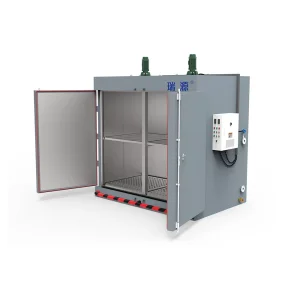
In the industrial clusters of Ota and Agbara, our furnaces are used to clean extrusion screws and die heads, ensuring 24/7 production uptime for beverage bottle and film manufacturers.
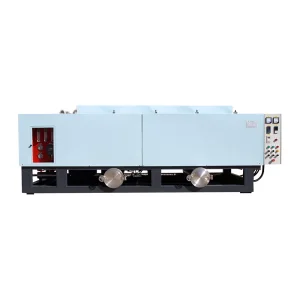
Revitalizing Nigeria’s textile mills requires precise cleaning of spinnerets. Our RYAN series ensures the removal of polyester and nylon residues without affecting the integrity of the micro-holes.
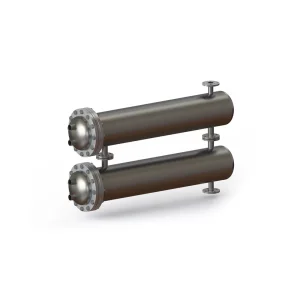
Serving the Port Harcourt and Delta regions, our large-scale vacuum furnaces clean heavy oil residues from filters and heat exchanger bundles used in refining processes.
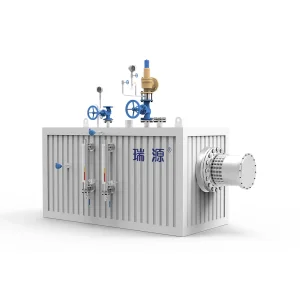
As Nigeria tackles plastic waste, our equipment helps recycling plants maintain clean filtration systems, turning waste plastic into high-purity pellets for export.
Jiangsu Ruiyuan is not just a manufacturer; we are an R&D powerhouse with over 30 years of expertise. Our technical roadmap for the 2024-2030 period focuses on three pillars relevant to the Nigerian market:
Developing dual-power systems (Electric + Gas) to mitigate local power supply fluctuations in Nigeria.
Integrating IoT sensors for remote monitoring from our China HQ to provide instant diagnostic support to Lagos factories.
Advancing biphenyl steam generation and vacuum calcination to reach 99.9% residue removal for medical-grade plastics.
We understand the complexities of the Nigerian market. Our export services include:
Jiangsu Ruiyuan Heating Equipment Technology Co., Ltd. is a Chinese manufacturing titan specializing in research and development, production, sales, and after-sales service. With over 30 years of experience in boiler R&D and manufacturing, Ruiyuan has mastered the art of industrial electric heating. Our philosophy is rooted in "integrity as our foundation, quality as our key to success, keeping pace with the times, and continuous innovation."
We solve four critical industry challenges: Inaccurate temperature control, difficulties in high-temperature cleaning, slow pipeline heating, and the sourcing of non-standard, custom-engineered equipment.
From Thermal Oil Heaters to Biphenyl Steam Generators - Engineered for Excellence.
Expert insights on Vacuum Cleaning Furnaces and industrial heating solutions.
A: The primary benefit is the preservation of equipment life. Traditional methods like blowtorching or chemical baths can warp metal parts or create toxic waste. Vacuum furnaces use controlled pyrolysis to decompose polymers into gases, which are then water-scrubbed, leaving parts perfectly clean without structural damage.
A: Yes. Our export-grade models for the Nigerian market feature reinforced electrical components, advanced PLC stabilization, and can be integrated with local generator sets. We also offer voltage stabilizers as part of the equipment package.
A: Manufacturing typically takes 30-45 days for standard models. Shipping from Shanghai or Ningbo to Nigerian ports usually takes another 35-45 days. We provide full tracking and documentation support for Customs clearance.
A: Absolutely. One of our core strengths is solving "challenges in sourcing non-standard equipment." We can customize chamber sizes, heating capacities, and control systems based on your specific industrial application in Nigeria.
A: We provide comprehensive digital manuals, video installation guides, and real-time technical support via WhatsApp or WeChat. For large-scale installations, we can arrange for engineering consultation via remote AR (Augmented Reality) tools.